Car Insurance for Young Drivers in Ontario: What Actually Sets the Price
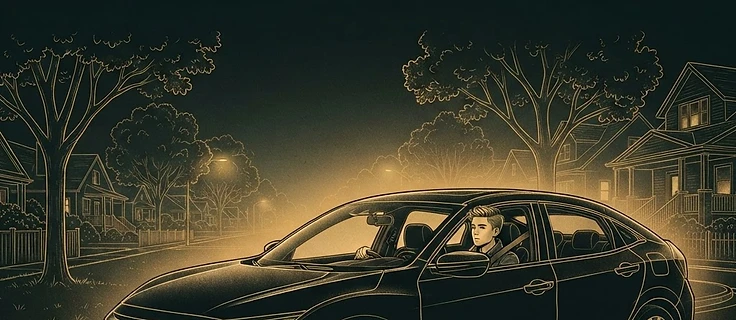
A young driver's Ontario premium is built from age, years licensed, driving record, vehicle, address, and coverage, and age is a legal rating factor in this province. Here is what each licence level means for a policy, the discounts worth asking about, and the small disclosure mistakes that cost the most.
In Ontario, what a young driver pays for car insurance is set by age, how long they have been licensed, their driving record, the vehicle, where it is parked, and how much coverage they buy. Age is a legal rating factor in this province, and Ontario's regulator notes that premiums usually drop after age 25.
That leaves a young driver with two jobs: understand what the price is built from, and make sure the policy describes the risk honestly. Most of the distance between a painful quote and a fair one sits in those two things.
In short
- Age is a permitted rating factor. Section 22 of Ontario's Human Rights Code allows an insurer to treat auto insurance differently by age, sex, and marital status on reasonable and bona fide grounds.
- The regulator publishes the factors. The Financial Services Regulatory Authority of Ontario lists age, gender, marital status, years licensed, driver training, convictions, annual kilometres, the vehicle, the deductible, and the coverage you choose, and says premiums usually drop after 25.
- The Ontario minimum is $200,000 in third-party liability, alongside statutory accident benefits and uninsured automobile coverage on every standard policy.
- A novice driver who reaches 9 demerit points loses their licence for 60 days, and escalating penalties begin with a 30-day suspension for a first offence.
- Who owns the car decides whose policy it is. Listing a daily driver as an occasional driver on a parent's policy is a disclosure problem, not a discount.
Shop 17+ insurers in one go.
Get a free quote and a dedicated Ontario broker who explains every option and stays with you to renewal.
Start your quoteWhy a young driver costs more
Car insurance pools risk. An insurer groups similar drivers, estimates what claims that group will produce, and prices each driver against the group. Ontario's regulator explains the logic plainly on its consumer pages: in general, older drivers have fewer accidents than younger drivers, particularly teenagers, and after age 25 premiums usually drop.
That is not a judgment about any one driver. A 19 year old with two years behind the wheel and a clean record is a better risk than a 40 year old with three at-fault collisions, and an insurer's rating rules are built to reflect exactly that. The starting point is the age band, and the rest of the file moves the number from there.
It is also legal to price this way. Section 22 of the Human Rights Code says the right to equal treatment in services and contracts is not infringed where a contract of automobile insurance differentiates on reasonable and bona fide grounds because of age, sex, marital status, family status, or disability. Insurers file their rates and rating rules with FSRA, which reviews them.
What the province lists as rate factors
FSRA's consumer guidance names the moving parts, and it is worth reading that list as a checklist rather than a mystery:
- Driving record: previous accidents, the length of time you have held a licence, whether you took driver training, speeding tickets, and convictions.
- Age, gender, and marital status: the demographic band the file falls into.
- The vehicle: how the car measures up for collision and theft experience, which the Insurance Bureau of Canada publishes.
- How much you drive: annual kilometres, and whether the car is used to commute to work or school.
- The coverage you buy: liability limits, collision, comprehensive, optional accident benefits, and endorsements.
- The deductible you choose: a lower deductible usually means a higher premium.
- The company: two insurers can price the same driver very differently, because their books of business behave differently.
For a young driver, three of those move the most: years licensed, the vehicle, and the coverage. Age you cannot change this year. The other two you can.
What each licence level means for the policy
Ontario's graduated licensing system is a road-safety program, but insurers read it as a record of experience, so the level matters.
G1 (Level One). You drive with a fully licensed driver who has at least four years of experience sitting beside you, your blood alcohol level must be zero, nobody in the vehicle can be unbelted, and you cannot drive between midnight and 5 a.m. You also cannot drive on 400-series highways with a posted limit over 80 km/h, or on certain high-speed expressways, unless the accompanying driver is a licensed instructor. Most drivers hold a G1 for 12 months, or 8 months after completing a ministry-approved Beginner Driver Education course.
G2 (Level Two). You drive alone, still at zero blood alcohol, for at least 12 months before the G road test. For the first six months, a G2 driver 19 or under may carry only one passenger 19 or under between midnight and 5 a.m., a limit that lifts to three passengers after six months and does not apply with a fully licensed adult in the car or when the passengers are immediate family.
Full G. No novice conditions. The experience still shows up in rating, because insurers ask how long you have held a full licence, not just how long you have been driving.
Insurance-wise, a G1 or G2 holder is normally listed on the policy that covers the vehicle they drive, usually a parent's or guardian's. The vehicle has to be insured no matter who is licensed to drive it, and every household member of driving age generally has to be disclosed to the insurer, including one who only drives occasionally.
The two ways a young driver gets insured
On a parent's or guardian's policy. This is the usual route when the young driver lives at home and drives a family vehicle. They are added as an occasional or secondary driver, the vehicle stays rated to whoever drives it most, and the added premium is usually much smaller than a standalone policy.
On their own policy. This is the route when the young driver owns the car, or is the principal driver of it. The registered owner normally insures the vehicle, so a car registered to a 20 year old belongs on a policy in their name even if a parent pays the bill.
The line between those two is principal use, not paperwork convenience. If the young driver commutes to school or work in the car five days a week, the file should say so. Under section 233 of Ontario's Insurance Act, a knowingly false statement in an application or renewal can invalidate a claim, and "listed as occasional, drives it daily" is the most common version of that mistake in this age group. The saving is real until the first claim, and then it is gone.
What every Ontario policy has to include
A standard Ontario auto policy carries:
- Third-party liability of at least $200,000, which pays other people when you are at fault. You can buy more, and for a young driver the increase is usually one of the cheapest dollars on the policy.
- Statutory accident benefits, which respond to your own injuries regardless of fault.
- Uninsured automobile coverage, for a collision with an uninsured or unidentified driver.
- Direct compensation for property damage (DCPD), where your own insurer handles your vehicle damage in an Ontario collision that is not your fault.
Collision and comprehensive are optional, and that is where a young driver's quote usually gets cut. On a ten year old car worth $5,000, dropping collision can be sensible. On a financed car, the lender will require it.
The place to be careful is liability. At the $200,000 minimum, a serious at-fault collision can leave a young driver personally responsible for the shortfall, and a judgment follows a person, not a policy. Ask what raising liability to $1 million or $2 million adds. It is often a small number next to the rest of the premium.
Discounts worth asking about
Every insurer sets its own list, so treat this as a set of questions rather than a promise. These are the ones that commonly exist in Ontario:
- Driver training. FSRA's rate-factor list includes whether you took driver training. Ask which courses your insurer recognizes, and keep the certificate, because a ministry-approved Beginner Driver Education course also shortens the G1 wait from 12 months to 8.
- Multi-vehicle or multi-line. A young driver added to a household policy that already carries a home or tenant policy often prices better than a standalone car policy.
- Away at school. Many insurers offer a discount for a student who is insured on the family policy but living away at college or university without the car. It has to be applied for, and it has conditions.
- Telematics or usage-based pricing. Some insurers rate on measured driving behaviour. For a careful young driver this can help, and for a hard-braking one it can hurt.
- Winter tires. Every Ontario insurer has to offer a discount when qualifying winter tires are installed, though the amount and the dates are set company by company.
- Group or affinity programs. Employer, alumni, and professional association programs exist, and a broker can tell you whether your household qualifies for any of them.
- Higher deductible, older vehicle. Raising a deductible or dropping optional physical damage coverage lowers the premium, with the trade-off landing on you at claim time.
What pushes a young driver's premium up
- Convictions. Demerit points stay on an Ontario driving record for two years from the offence date, and insurers weigh convictions at renewal. A novice driver also faces the escalating penalties program: 30 days for a first offence that draws four or more points, 90 days for a second, and the loss of the novice licence for a third.
- An at-fault accident. One at-fault claim can outweigh several years of clean driving on a young file.
- A lapse in coverage or a cancellation for non-payment. This can push a driver toward the high-risk market, where premiums are much higher and payment terms are stricter.
- The vehicle. Two-door models, performance trims, and high-theft vehicles cost more to insure. A used sedan with a good safety record is the cheaper car to own and the cheaper car to insure.
- Annual kilometres and commuting use. Driving to school or work every day is rated differently from occasional weekend use.
- The address. Territory is a rating factor in Ontario, which is why the same driver and car can price differently across cities.
- Monthly payment plans. Paying in instalments usually carries a financing charge that an annual payment avoids.
How to lower the number without gutting the coverage
- Get the household described correctly. List every licensed driver, state who drives the car most, and give the address where the car actually sleeps. Correct files price better than corrected ones.
- Shop more than one insurer. This matters more for young drivers than for any other group, because insurers weight inexperience differently. A broker sees markets a single direct insurer cannot offer.
- Pick the vehicle with insurance in mind. Before buying, ask what the car costs to insure in your postal code. A different trim or model year can change the quote more than a discount will.
- Take the training and send the certificate. It affects both the licensing timeline and, at many insurers, the rate.
- Keep liability high and cut where the risk is yours. Raising the deductible on physical damage is a manageable bet. Cutting liability to the minimum is not.
- Ask about every discount by name. Away at school, winter tires, group programs, telematics, multi-line. Unclaimed discounts are the most common form of overpaying.
- Re-shop at each renewal, and at each licence upgrade. The move from G2 to full G, a birthday, a change of address, or a clean year all change the file.
What to have ready for a quote
- Driver's licence number, plus the dates the G1, G2, and full G were issued.
- The vehicle identification number, and whether it is owned, financed, or leased.
- The address where the car is parked overnight.
- Annual kilometres, and whether the car is used for school or work.
- Every other licensed driver in the household.
- Current or previous insurance history, including any gap in coverage.
- Any accidents or convictions in the period your insurer asks about.
- Beginner Driver Education certificate and winter tire details, if you have them.
A quote is only as accurate as those answers. An estimate built on "occasional driver, pleasure use" is a number for a different driver, and it is the version that gets corrected at claim time.
Keep reading
- How much is car insurance in Ontario in 2026?
- Student moving away for school: how it changes auto and home insurance
- Winter tire insurance discounts in Ontario
- Ontario high-risk driver insurance: who qualifies and what it costs
- Auto insurance in Ontario: coverage explained
Sources
- FSRA, What determines your auto insurance rate
- FSRA, What is in a standard auto insurance policy
- Human Rights Code, R.S.O. 1990, c. H.19, section 22
- Ontario, Get a G driver's licence: new drivers
- Ontario Ministry of Transportation, Getting your driver's licence
- Ontario, Understanding demerit points
- DriveTest, Drivers' licences for cars
- Insurance Bureau of Canada, Mandatory auto insurance requirements
- Insurance Act, R.S.O. 1990, c. I.8, section 233
Where Truly Insurance insures across Ontario
Truly Insurance is an Ontario insurance brokerage, and our team of licensed insurance brokers is authorized to arrange coverage anywhere in the province. Our home office is in Kitchener, at 22 Water St S Ste 100, and our brokers work with clients across the Waterloo Region cities of Waterloo, Cambridge, and Guelph, the Southwestern Ontario corridor including London, Brantford, and Stratford, the entire Greater Toronto Area from Toronto and Mississauga to Brampton and Markham, Eastern Ontario including Ottawa and Kingston, and Northern Ontario including Greater Sudbury and Thunder Bay.
You do not have to live near our Kitchener office to work with us. Every Ontario policy is arranged by a named broker who works with you by phone, email, and video, and our team can quote, bind, and service coverage for any address in the province. Find your city or call (519) 800-4770 and a licensed Ontario broker will reach out the same day.
Frequently asked questions
How much is car insurance for a young driver in Ontario?+
There is no single number, and any quote that presents one as typical should be treated with suspicion. The price depends on age, how long you have been licensed, your driving record, the vehicle, the address, the annual kilometres, and the coverage you choose. Ontario's regulator notes that premiums usually drop after age 25. The practical approach is to get several quotes on identical coverage, because insurers weight inexperience differently and the spread between them is widest at your age.
Is a G1 driver covered by car insurance in Ontario?+
A G1 driver is normally covered by the policy on the vehicle they are driving, provided they have the owner's permission and are listed on the policy as a driver. Every household member of driving age should be disclosed to the insurer, including one who only drives occasionally. A G1 holder must drive with a fully licensed driver who has at least four years of experience, must have zero blood alcohol, and cannot drive between midnight and 5 a.m.
Should a young driver be on a parent's policy or have their own?+
It depends on who owns the car and who drives it most. If the young driver lives at home and drives a family vehicle, being added to the household policy is usually the cheaper route. If the car is registered to the young driver, or they are its principal driver, the policy should be in their name. Listing a daily driver as an occasional driver to lower the premium is a misrepresentation that can affect a claim.
Does driver's education lower car insurance in Ontario?+
It can, and it changes your licensing timeline either way. A ministry-approved Beginner Driver Education course lets you take the G2 road test after 8 months instead of 12. Ontario's rate regulator lists driver training as part of the driving record insurers use, so ask which courses your insurer recognizes before you pay for one, and keep the certificate.
Can an insurance company refuse to insure a young driver?+
An insurer can decline to quote a risk, and a young driver with a poor record or no insurance history is one insurers scrutinize. If you have been declined, ask why, then work with a broker, who can approach markets that write new drivers and can tell you what on your file is driving the decision. New-driver programs and telematics programs are often the way in.
What happens to my premium after a ticket as a novice driver?+
Two things happen in parallel. Demerit points are added to your driving record and stay there for two years from the offence date, and a novice driver who reaches 9 points is suspended for 60 days. Separately, your insurer weighs the conviction at renewal, and a conviction that draws four or more points can also trigger Ontario's escalating penalties: a 30-day suspension for a first offence, 90 days for a second, and loss of the novice licence for a third.
Does a student away at school still need to be on the family policy?+
If they will drive the car when they are home, they need to be listed, and many insurers offer a discount for a student who is away at school without the vehicle. The conditions and the amount are set by each insurer, so ask before the school year starts rather than at renewal.
What is the cheapest way to insure a young driver in Ontario?+
There is no universal cheapest route, but the reliable levers are the same for everyone: describe the household and the principal driver accurately, choose a modest vehicle rather than a performance model, take the training, claim every discount you qualify for by name, keep liability limits up while managing the deductible, and re-shop at each renewal and licence upgrade. A broker who can quote several markets will usually find a lower number than one direct insurer.
Disclaimer: This article is for general information only and is not financial or insurance advice. Rates, coverage, and eligibility vary by individual circumstances, insurer, and region. Always contact a licensed insurance broker for guidance specific to your situation.
Keep reading

 Guides
Should You Make a Claim or Pay Out of Pocket? How a Claim Affects Your Premium
Paying for a small loss yourself can cost less than the premium increase a claim triggers, but only when the damage is genuinely small and nobody is hurt. Here is how fault, Ontario's minor at-fault accident rule, accident forgiveness, and home claims actually move your premium.
Read article
 Auto Insurance
Winter Tire Insurance Discounts in Ontario: What Drivers Need to Know
Every Ontario auto insurer has to offer a winter tire discount, but the percentage, the qualifying window, and the proof are decided company by company. Here is how the discount actually works, which tires count, and what happens if the season does not go to plan.
Read article
 Auto Insurance
Ontario's Most Stolen Vehicles: What Owners Need to Know
Auto theft cost Canadians over $1 billion in claims in 2024, and Ontario is ground zero. Here is the latest list of Ontario's most stolen vehicles, how comprehensive coverage and your deductible decide what a theft actually pays, the anti-theft devices that qualify for a discount, and why two identical cars can land at very different premiums.
Read article