Ontario's Most Stolen Vehicles: What Owners Need to Know

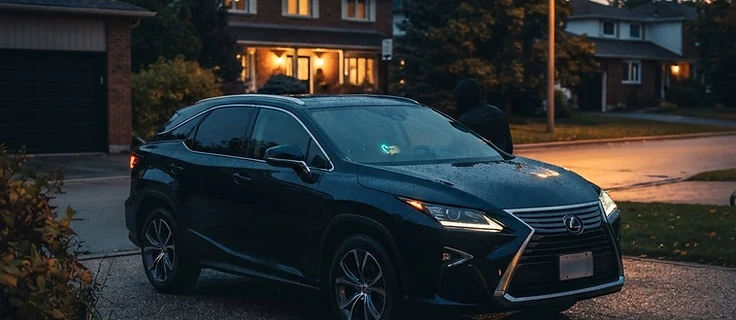
Auto theft cost Canadians over $1 billion in claims in 2024, and Ontario is ground zero. Here is the latest list of Ontario's most stolen vehicles, how comprehensive coverage and your deductible decide what a theft actually pays, the anti-theft devices that qualify for a discount, and why two identical cars can land at very different premiums.
Auto theft in Ontario is not the nuisance it was a decade ago, it is a billion-dollar claims problem that quietly shapes what every driver pays for insurance. In 2024 alone, auto theft losses across Canada topped $1 billion, according to the Insurance Bureau of Canada, and Ontario carries the heaviest share. The good news, confirmed in new 2025 data, is that theft is finally trending down. The honest news is that the vehicles most targeted, the coverage that pays, and the deductible you choose still decide whether a theft becomes a minor inconvenience or a major financial loss.
This guide lays out the most recent list of Ontario's most stolen vehicles, how comprehensive coverage actually works for a theft, how your deductible changes a claim, the anti-theft devices that qualify for a discount, and why premiums differ so much, even for the same vehicle in the same city.
Ontario's top 10 most stolen vehicles in 2024
The definitive list comes from Équité Association, the non-profit anti-fraud organization that tracks insurance theft data across Canada. Its most recent ranking is based on the number of thefts that occurred in 2024, broken down by region. Ontario's list reads like a who's-who of premium SUVs and best-selling pickups.
- Lexus RX Series, 2,083 thefts, a 9.4 percent theft rate. The single most stolen vehicle in Ontario by a wide margin.
- Honda CR-V, 1,150 thefts, 1.0 percent. Canada's best-selling compact SUV and a perennial target.
- Ford F150 Series, 613 thefts, 0.5 percent. The country's top-selling pickup.
- Toyota Highlander, 575 thefts, 1.7 percent.
- Honda Civic, 380 thefts, 0.3 percent. Still targeted despite its age on the road.
- Land Rover Range Rover Sport, 264 thefts, a 4.2 percent theft rate. Fewer units on the road, but an exceptionally high theft rate per insured vehicle.
- Honda Accord, 220 thefts, 1.2 percent.
- Chevrolet/GMC Silverado/Sierra 1500, 169 thefts, 0.7 percent.
- RAM 1500 Series, 147 thefts, 0.1 percent.
- Toyota Tacoma, 144 thefts, 0.9 percent.
Nationally, the same data set puts the Honda CR-V at number one with 4,117 thefts, followed by the Lexus RX Series with 2,202, and the Ford F150 with 1,182. What jumps out in the Ontario breakdown is the dominance of luxury and premium SUVs. The Lexus RX alone was stolen at a 9.4 percent rate, meaning roughly one in every ten insured Lexus RX vehicles in Ontario was reported stolen in 2024. That is a remarkable figure, and it is the single biggest reason comprehensive premiums on that vehicle are high.
One number worth memorizing: theft rate, not raw theft count, is what most influences your premium. A vehicle with fewer units on the road but a high theft rate, like the Range Rover Sport, can cost more to insure comprehensively than a vehicle stolen more often in absolute terms.
Shop 17+ insurers in one go.
Get a free quote and a dedicated Ontario broker who explains every option and stays with you to renewal.
Start your quoteWhy these vehicles get stolen
Theft today is overwhelmingly an organized-crime enterprise, not a crime of opportunity. Équité Association has repeatedly flagged three drivers behind the pattern.
The first is technology. Thieves exploit relay and reprogramming attacks that defeat push-button ignitions. A key fob signal inside a home is captured and relayed to the driveway, or a new key is programmed through the diagnostic port in under a minute. Vehicles without engine immobilizers, or with older, defeatable systems, are the easiest targets.
The second is export demand. The vehicles that dominate Ontario's list, luxury SUVs and popular pickups, hold strong resale value overseas and in domestic resale markets stripped of their VINs. A stolen Lexus RX or Range Rover Sport can be worth multiples of its scrap value intact.
The third is parts. Some high-volume vehicles, like the Honda CR-V and Civic, are worth more dismantled than whole, because their parts fit a large installed base of similar models.
The practical takeaway is that the same features that make a vehicle desirable to you, comfort, brand prestige, resale value, are exactly what makes it desirable to a thief. That is why theft data shows up so directly in your comprehensive premium.
What auto theft costs Canadians and Ontarians
The financial scale of the problem is what pushed premiums up in the first place. The Insurance Bureau of Canada reported that in 2023 auto theft losses reached over $1.5 billion, an increase of nearly 20 percent over 2022. Nationally, auto theft claims costs had already increased by 254 percent over the preceding period. Statistics Canada found that auto theft claims rose 27 percent from 2020 to 2023, reaching nearly 50,000 claims a year.
In 2024, the numbers stayed elevated. Ratehub, drawing on Insurance Bureau of Canada figures, recorded 34,141 theft claims costing $1,035,550,793, an average of $30,332 per claim. The Insurance Bureau of Canada has estimated that the surge in auto theft added roughly $130 to the average Ontarian's auto premium, a cost spread across every policyholder, not just the ones whose cars were taken.
The number that explains why comprehensive coverage got expensive lives in a Statistics Canada analysis. In Ontario, the comprehensive claims ratio, the claims costs paid out for every dollar of comprehensive premium collected, reached $1.90. Insurers were paying out nearly two dollars for every dollar they took in on comprehensive coverage, the coverage that pays for theft. When a line of business pays out more than it collects, premiums rise to close the gap, and that rise lands on the vehicles and territories with the worst loss experience first.
Comprehensive coverage: the coverage that pays for theft
Here is the part many drivers get wrong at claim time. Theft is not covered by collision coverage, and it is not covered by the mandatory portion of an Ontario auto policy. It is covered by comprehensive coverage, an optional section that pays for losses other than a collision, including theft, fire, vandalism, weather, falling objects, and certain animal strikes. Specified perils is a narrower version that lists theft explicitly, and all perils combines comprehensive and collision elements under one section.
If your vehicle is financed or leased, your lender almost certainly requires comprehensive coverage as a condition of the loan. If you own the vehicle outright, comprehensive is optional, and dropping it is a real choice on an older, low-value car. The trade-off is straightforward: without comprehensive, a theft is a total loss you absorb yourself, and a $30,000 vehicle gone overnight becomes a $30,000 problem with no insurer to call. For any vehicle still worth meaningfully more than your deductible, comprehensive is the coverage that stands between you and that outcome. To price it properly, compare comprehensive car insurance in Ontario across the whole market rather than trusting a single direct quote.
A detail worth confirming with your broker: whether your comprehensive section includes replacement cost or actual cash value. Replacement cost replaces the stolen vehicle without deducting for depreciation, often through a limited-time endorsement on newer vehicles. Actual cash value deducts depreciation and pays less. On a stolen-vehicle claim, which is almost always a total loss, the difference between those two bases can be thousands of dollars.
How your deductible changes a theft claim
Your deductible is the amount you pay out of pocket before insurance covers the rest. On a theft, the deductible applies once, whether the vehicle is recovered damaged or not recovered at all.
The math is simple but worth working through. If your comprehensive deductible is $500 and your stolen vehicle is valued at $30,000, the claim pays $29,500. If your deductible is $1,000, it pays $29,000. If the vehicle is recovered with $4,000 of damage, the same deductible applies to the repair, and the insurer pays $3,000 on a $500 deductible or $3,500 if your deductible is $500.
A higher comprehensive deductible lowers your premium, because you are retaining more of the risk. Moving from a $500 to a $1,000 comprehensive deductible is one of the most effective rate levers, but only choose a deductible you can actually absorb in a claim year. A theft can happen at any time, and a deductible you cannot cover turns a covered loss into a stressful one. For high-theft-risk vehicles, the calculus leans toward keeping the deductible moderate, because the risk of the claim is genuinely higher, and the premium savings from a large deductible partly exist to reflect that.
One often-overlooked point: if your vehicle is recovered intact, there is usually no claim to pay a deductible against, because there is no loss. Recovery rates matter here. Ratehub's 2025 trend report put Ontario's recovery rate at 51 percent, meaning roughly half of stolen vehicles are eventually found. Quebec sat at 48 percent, while Alberta led at 73 percent. A higher recovery rate softens the financial blow, but recovery is not guaranteed, and a recovered vehicle can still be a write-off or carry substantial damage.
Anti-theft devices: what qualifies and what the discount is really worth
Most Ontario insurers offer an anti-theft discount on the comprehensive, specified perils, or all perils portion of your premium when an approved device is professionally installed. The devices that generally qualify fall into three tiers.
The first is a factory or after-market engine immobilizer, which prevents the vehicle from starting without the correct key or fob. Immobilizers are the most widely recognized deterrent and the baseline most insurers look for, particularly on vehicles with keyless ignition.
The second is an alarm system, which deters opportunistic theft through audible and visible alerts. Alarms help against old-fashioned break-ins but are less effective against the relay and reprogramming attacks that dominate today's organized theft.
The third is a recovery or GPS tracking system, which does not stop the theft but significantly improves the odds the vehicle is found. Some insurers price the discount around recovery systems specifically, and a few high-theft vehicles see the largest benefit here because recovery reduces the claim payout.
The honest part is the size of the discount. Published figures range widely, from roughly 5 to 15 percent on the comprehensive premium with some sources quoting up to 25 percent, but real-world reports are more modest. Drivers on Canadian forums have described reductions of only $10 to $30 in some cases, because the discount applies to the comprehensive section, not the whole premium, and comprehensive is only one part of what you pay. The discount is real, but it is best understood as a meaningful reduction on a high-theft vehicle's comprehensive premium, not a windfall.
The practical move is to tell your broker exactly what device is installed, whether factory or after-market, and have it rated. If you drive one of Ontario's most stolen vehicles, an after-market immobilizer or a tracking system can pay for itself in a few years through the discount and, more importantly, by reducing the chance the theft happens at all. The cheapest outcome is always the one where the claim never occurs.
Why premiums differ, even for the same vehicle
Ontario auto pricing is borderline personal, and nowhere is that more visible than on theft-exposed vehicles. Two drivers with the same car can see very different comprehensive premiums because the rate is built from layers.
- The vehicle itself, its theft rate, claim cost, and repair cost, is the starting point. A Lexus RX and a Honda CR-V are both on the list, but they do not rate the same.
- Your territory, the postal code where the vehicle is kept overnight. Toronto, Mississauga, and Brampton typically carry heavier base rates than smaller centres such as Kingston, Barrie, or London, because claims frequency and theft density differ by area.
- Your deductible, as above.
- Anti-theft devices, as above.
- Your claims history, including prior theft claims, which can follow you for several years.
- The insurer's own experience, each carrier prices theft risk from its own claims data, which is why the same driver can land very differently across carriers.
That last point is the one that matters most. Because each insurer weights theft risk using its own experience, the vehicle at the top of the theft list can be priced aggressively by one carrier and conservatively by another. A single quote, from any one direct insurer, tells you one company's reading of the risk and nothing else. Shopping the same vehicle across 17-plus insurers is how a driver of a high-theft car finds the carrier whose book is friendlier to it, and the spread between the cheapest and most expensive quote on a theft-targeted vehicle is often the widest spread in the market.
That is also why a broker who re-shops at every renewal matters. The theft rankings shift year over year, and an insurer that was cheapest for your vehicle last year may not be this year.
The good news: theft is finally dropping
After years of increases, 2025 brought the first meaningful reversal. The Insurance Bureau of Canada reported that from 2024 to 2025 the number of auto theft claims fell 24 percent across Canada, and the value of those claims dropped 30 percent. It was the first year since 2021 that theft losses stayed below the billion-dollar mark. In the first half of 2025, auto theft nationally was down roughly 19 percent, with Ontario, Quebec, and Alberta all seeing significant declines. York Regional Police's Operation Auto Guard 3.0 reported a 35 percent drop in auto thefts in its region.
The drivers behind the turnaround are real. Insurers and automakers have moved on factory immobilizers and updated software, after-market tracking and recovery uptake has risen, and coordinated enforcement has disrupted export networks. Public Safety Canada's National Action Plan on Combatting Auto Theft, alongside provincial measures, has put more structure around the problem.
It is worth being clear about what the drop does and does not mean. Theft is down sharply, but it has not disappeared, and 2024 was still a billion-dollar claims year. A decline does not remove the vehicle from the theft list, and the risk and premium impact persist for the models that remain most targeted. The trend is encouraging, and the coverage decisions, around comprehensive, deductibles, and anti-theft devices, remain as relevant as they were a year ago.
What you can do right now
If you drive one of Ontario's most stolen vehicles, a short list closes most of the exposure:
- Confirm comprehensive coverage is in force. Without it, a theft is an uninsured loss. Confirm whether it pays on a replacement cost or actual cash value basis.
- Set a deductible you can absorb. A moderate deductible keeps the claim manageable on a high-risk vehicle where the savings from a large deductible may not be worth the out-of-pocket risk.
- Install and rate an anti-theft device. An after-market immobilizer or recovery system, professionally installed and disclosed to your broker, can both reduce the premium and, more importantly, prevent the loss.
- Store the fob securely. A faraday pouch or metal box defeats relay attacks, and keeping keys away from the front door removes the easiest capture point.
- Shop the whole market at every renewal. Because each insurer weights theft risk differently, re-shopping is how a driver of a targeted vehicle finds the carrier whose book is friendliest to it. A broker runs 17-plus insurers at once.
The bottom line
Ontario's most stolen vehicles are not random, they are the premium SUVs and best-selling pickups that thieves can move quickly for export or parts, and that pattern shows up directly in what you pay for comprehensive coverage. The 2025 decline in theft is the best news in years, but it does not erase the risk for the models that remain at the top of the list. The coverage that pays for theft is comprehensive, the deductible decides what a claim actually returns, and the anti-theft device you install and rate is the single most practical lever you control. If you drive a vehicle on this list, the right move is to confirm your coverage, set a sensible deductible, install a recognized deterrent, and let a broker shop the whole market so you are paying the rate the friendliest carrier will offer, not the rate the scariest one will. Start a quote with Truly Insurance and a named Ontario broker will run your vehicle against 17-plus insurers and tell you exactly where it lands.
Where Truly Insurance insures across Ontario
Truly Insurance is an Ontario insurance brokerage, and our team of licensed insurance brokers is authorized to arrange coverage anywhere in the province. Our home office is in Kitchener, at 22 Water St S Ste 100, and our brokers work with clients across the Waterloo Region cities of Waterloo, Cambridge, and Guelph, the Southwestern Ontario corridor including London, Brantford, and Stratford, the entire Greater Toronto Area from Toronto and Mississauga to Brampton and Markham, Eastern Ontario including Ottawa and Kingston, and Northern Ontario including Greater Sudbury and Thunder Bay.
You do not have to live near our Kitchener office to work with us. Every Ontario policy is arranged by a named broker who works with you by phone, email, and video, and our team can quote, bind, and service coverage for any address in the province. Find your city or call (519) 800-4770 and a licensed Ontario broker will reach out the same day.
Frequently asked questions
What is the most stolen vehicle in Ontario?+
According to Équité Association's 2024 data, the most stolen vehicle in Ontario is the Lexus RX Series, with 2,083 thefts and a 9.4 percent theft rate, meaning roughly one in every ten insured Lexus RX vehicles in the province was reported stolen. The Honda CR-V, Ford F150, Toyota Highlander, and Honda Civic round out the top five.
Does Ontario auto insurance cover vehicle theft?+
Yes, but only if you carry comprehensive coverage, which is optional and pays for theft, fire, vandalism, and certain other losses. Theft is not covered by collision coverage or by the mandatory portion of an Ontario policy. If your vehicle is financed or leased, your lender typically requires comprehensive coverage. Confirm whether it pays on a replacement cost or actual cash value basis.
What deductible applies to a stolen vehicle claim?+
Your comprehensive deductible applies once to a theft claim. If your stolen vehicle is valued at $30,000 and your deductible is $500, the claim pays $29,500. A higher deductible lowers your premium, but choose one you can absorb in a claim year, especially on a high-theft-risk vehicle where the chance of a claim is genuinely higher.
How much does an anti-theft device reduce my Ontario insurance premium?+
Most insurers offer a discount on the comprehensive, specified perils, or all perils premium when an approved device, such as an engine immobilizer, alarm, or GPS recovery system, is professionally installed. Published discounts range from about 5 to 15 percent, though real-world savings can be modest, often $10 to $30 on some policies, because the discount applies only to the comprehensive section. The bigger value is preventing the theft from happening at all.
Why is my comprehensive insurance so high if my car is on the theft list?+
Comprehensive premiums reflect the vehicle's theft rate and claim cost, your territory or postal code, your deductible, anti-theft devices, your claims history, and each insurer's own loss experience. In Ontario the comprehensive claims ratio reached $1.90 per dollar of premium, so insurers raised comprehensive rates, especially on the most targeted vehicles. Because each carrier weights theft risk differently, shopping multiple insurers is how you find the one whose book is friendliest to your vehicle.
Is auto theft going down in Ontario?+
Yes, sharply, in 2025. The Insurance Bureau of Canada reports theft claims fell 24 percent from 2024 to 2025 and claim values dropped 30 percent, the first year below $1 billion since 2021. In the first half of 2025 auto theft was down roughly 19 percent nationally, with Ontario, Quebec, and Alberta all posting significant declines. The risk has not disappeared, but the trend is the most encouraging in years.
Which anti-theft devices qualify for an insurance discount in Ontario?+
Most insurers recognize three tiers: factory or after-market engine immobilizers, alarm systems, and GPS tracking or recovery systems. The device generally must be professionally installed and disclosed to your broker to be rated. Immobilizers are the baseline most insurers look for, and recovery systems can carry the largest discount on high-theft vehicles because they reduce the claim payout.
Disclaimer: This article is for general information only and is not financial or insurance advice. Rates, coverage, and eligibility vary by individual circumstances, insurer, and region. Always contact a licensed insurance broker for guidance specific to your situation.
Keep reading

 Guides
The TD Broker Scam in Ontario: How False Brokers Trap Drivers, and How to Verify a Real One
A wave of "TD broker" scams is targeting Ontario drivers, newcomers, and small businesses, and most victims only find out at claim time. Here is how false brokers operate, the gap that lets falsified policies sit undetected, broker vs agent, and how to verify a licensed broker in Ontario.
Read article
 Auto Insurance
Ontario High-Risk Driver Insurance: Who Qualifies, What It Costs, and How to Pay
A DUI, a string of tickets, an at-fault accident, or a cancelled policy for non-payment can push any Ontario driver into the high-risk market. Here is who is considered high risk, what it costs, when you may have to pay your premium in full, which insurers write it, and how to climb back to standard rates.
Read article
 Real Estate
Ontario Absentee Landlord Insurance: What It Covers and Who It Applies To
A homeowner policy does not cover a rental, and it definitely does not cover one you manage from another city, province, or country. Here is what Ontario absentee landlord insurance covers, who needs it, what it excludes, and how to get it right from a distance.
Read article