Renting a Room or Unit in Your Ontario Home: What Insurance Allows

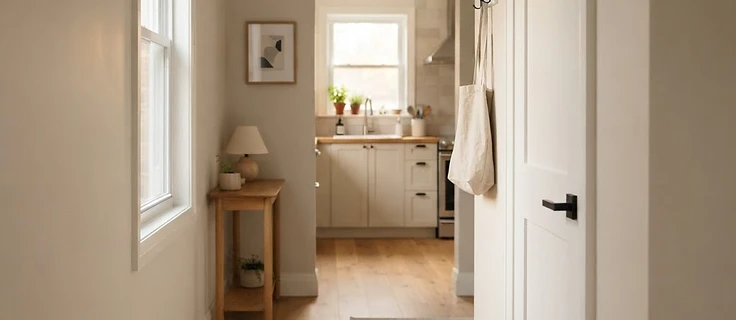
The insurance question every Ontario homeowner should answer before renting part of their home is which kind of rental they are running. Insurers draw a line between you living alone, a boarder, a unit rented to one family, and rooms to unrelated individuals or students, and most accept a single-family tenancy but treat a rooming house as a different risk class. Here is what each occupancy means for your home insurance, the IBC disclosure rules, and the short legal and tax basics.
The insurance question every Ontario homeowner should answer before renting out part of their home is not "can I?", it is "which kind of rental am I running?" Insurers draw a clear line down the middle of the occupancy, and the line decides what your policy allows, what it charges, and whether it pays a claim at all. You living in the home, you living in it with one boarder, you renting a self-contained unit to a single family, and you renting rooms separately to unrelated individuals or students are four different risks in an underwriter's eyes. Most Ontario home insurers will accept a unit rented to one family, and many will decline or re-rate a house rented by the room to unrelated people. Getting the category wrong, or worse, not telling your insurer at all, is the single most common way a home insurance claim gets denied.
This guide lays out, using only verifiable Ontario and Canadian sources, the occupancy spectrum that decides your insurance, what your homeowner policy will and will not do once a paying occupant moves in, and the short legal and tax follow-on every owner should know.
In short
Ontario home insurers sort your arrangement into one of four boxes: owner-occupied with no rental, owner-occupied with a boarder who shares your kitchen or bathroom, a self-contained unit rented to a single family, and a rooming-style house rented by the room to unrelated individuals or students. A standard homeowner policy only fits the first box, and the Insurance Bureau of Canada is explicit that adding a paying occupant changes your risk profile and that failing to disclose it can void your policy. Most insurers will extend or endorse coverage for a single boarder or a unit rented to one family; many treat a house rented by the room to unrelated people as a different risk class and decline it or move it to a rooming-house form. Tell your broker the exact occupancy before anyone moves in, put the arrangement in writing, and add or switch to the coverage that matches the box you are actually in.
Shop 17+ insurers in one go.
Get a free quote and a dedicated Ontario broker who explains every option and stays with you to renewal.
Start your quoteThe occupancy spectrum: which box are you in?
Before insurance, before law, before taxes, sort your arrangement into one of these four. The category, not the rent you charge, is what an underwriter prices.
1. Owner-occupied, no rental. You live in the home and no one pays you to live there. This is what a standard Ontario homeowner policy is built for, and no change is needed.
2. Owner-occupied, with a boarder. You live in the home and you rent a room to one person who shares your kitchen or bathroom. The Insurance Bureau of Canada says taking in a boarder changes your risk profile, so you must disclose it. Most Ontario insurers can keep you on a homeowner form with a boarder or roomer endorsement added, because the core use of the home has not changed.
3. A self-contained unit rented to a single family. This is the box most owners do not realize is different from a boarder. A basement apartment, a laneway unit, or a duplex side rented to one household under one lease is a rental unit, even if you live in the rest of the building. Most Ontario home insurers will accept this, on a landlord or rental-unit endorsement, or on a separate landlord policy, because one family under one lease is a stable, predictable occupancy they know how to rate. This is the arrangement insurers are most comfortable insuring after owner-occupied.
4. Rooms rented separately to unrelated individuals or students. This is the box that breaks standard coverage. When the same house is rented by the room to three or four unrelated adults, or to students each on their own agreement, most Ontario home insurers treat it as a rooming or lodging house, a different risk class than a single-family home. Many decline it outright on a standard homeowner or landlord form, and the ones that write it move it to a rooming-house policy rated for the higher turnover, vacancy, and fire load. Pricing it correctly up front is far cheaper than a denied claim, and calling it "a few roommates" to keep a standard policy is exactly the kind of misrepresentation that lets an insurer void coverage after a loss.
The pattern to notice: insurers are comfortable with one household under one lease, and they get nervous when the number of unrelated paying adults goes up. A single family is one risk; a house of unrelated individuals is another. If your arrangement is drifting toward box four, tell your broker before the second unrelated tenant signs, because the insurance you have was almost certainly not written for it.
Why your homeowner policy is not enough
A standard Ontario homeowner policy covers the dwelling, your personal contents, and your personal liability for you, your spouse, and your dependants. The Insurance Bureau of Canada makes the points that matter most once a paying occupant arrives.
Your home policy does not cover the occupant's contents or personal liability. A boarder's or tenant's stolen laptop, or damage they cause to a neighbour's property, is not what your homeowner policy was built to pay. Failing to disclose the new occupancy can void the policy altogether. The IBC's example is direct: if a tenant accidentally starts a fire in your basement and your insurer did not know you had a tenant, your policy could be voided, leaving you without coverage at the moment you need it most. The duty to disclose a material change in risk is a basic feature of Ontario insurance, and adding a paying occupant is a material change.
The right coverage also does work a homeowner policy does not: it can replace lost rental income if the unit must vacate because of an insured loss, and it can cover defence costs if a claim is made because a tenant or guest is injured on the property. Talk to your insurance representative before the living arrangement changes, keep a written record of that notification, and see our Ontario home insurance coverage guide for what a home policy does and does not cover.
What insurance you actually need
Match the policy to the box on the spectrum.
- Box 1, owner-occupied: your homeowner policy stands as-is.
- Box 2, one boarder who shares your home: a boarder or roomer endorsement on your homeowner policy, the lightest-touch option, built for exactly the owner-occupier-with-one-boarder case.
- Box 3, a unit rented to one family: a landlord or rental-unit endorsement, or a separate landlord policy if you live elsewhere. Most insurers accept a single-family tenancy on these forms. See our landlord insurance in Ontario guide.
- Box 4, rooms to unrelated individuals or students: a rooming-house or lodging-house policy, rated for the higher risk, or a market that specializes in it. Do not assume your current insurer will keep you.
Two elements deserve attention in every box. Liability coverage should reflect that a non-owner is living on the property, because an injury to a tenant or guest is a different claim than one involving your own household. And the occupant's contents are their own responsibility, which is why the IBC recommends the lease require the tenant to carry tenant insurance and provide proof of it each year. Requiring it shifts contents and personal-liability risk off your policy and protects your deductible.
Short-term rentals are a different insurance problem
Everything above assumes a long-term tenant. Renting a room by the night through a home-sharing platform is a different risk and a different insurance question. The IBC notes that with short-term rentals, guests may not feel invested in the property, and that if you lease out a room or your home for profit, an insurer could take the view that you are running a bed-and-breakfast-style activity and could deny coverage under a standard home policy. Some insurers offer a home-sharing or short-term rental endorsement, and some platforms offer host liability coverage, but neither is automatic, so tell your broker before the first booking.
The legal and tax bits, briefly
Two non-insurance points are worth knowing, kept short because they are support, not the headline.
On the law: Ontario's Residential Tenancies Act, 2006 exempts, under section 5, living accommodation whose occupant is required to share a bathroom or kitchen with the owner. The Landlord and Tenant Board's own guide says the Act does not apply if the tenant must share a kitchen or bathroom with the landlord, so a boarder who shares your kitchen is generally a licensee, not an LTB tenant, and a dispute runs through the Superior Court of Justice rather than the Board. A self-contained unit rented to one family, by contrast, is normally an RTA tenancy. The layout of the home, not the wording of the contract, decides the category, so put the arrangement in writing and check with an Ontario lawyer if the line is unclear.
On taxes: rent you receive is rental income reportable to the Canada Revenue Agency, with the related expenses generally deductible, subject to CRA rules. If you rent only part of the home you still live in, the CRA's guidance generally lets you keep the principal-residence exemption for the part you live in and report any gain only on the rented part, on Schedule 3 and Form T2091. Confirm the treatment with an accountant, and tell your mortgage provider before a paying occupant moves in.
On fire safety: by law, every Ontario home must have working smoke alarms on every storey and outside all sleeping areas, plus carbon-monoxide alarms adjacent to sleeping areas where there is an attached garage or fuel-burning appliance. The Ontario Fire Code makes the landlord responsible for installing and maintaining them, and disabling one is an offence.
A short checklist before anyone moves in
- Pick the right box. Owner-occupied, one boarder, a unit to one family, or rooms to unrelated individuals. The category decides the insurance.
- Tell your insurance representative first, in writing. The IBC is explicit that disclosure should happen before the living arrangement changes.
- Add or switch to the matching coverage. Boarder endorsement, landlord endorsement or policy, or a rooming-house form.
- Be honest about unrelated-individual or student rentals. A rooming house is a different risk class, and misrepresenting it can void coverage.
- Put the lease in writing. Rent, notice, termination, who pays utilities, and house rules, especially for a boarder outside the RTA.
- Require tenant insurance. It shifts contents and personal-liability risk off your policy and protects your deductible.
- Confirm smoke and carbon-monoxide alarms. Installed and maintained by you, on every storey and outside sleeping areas.
- Report the rental income and tell your lender. Track the rented portion for the CRA, and notify your mortgage provider.
The bottom line
The single insurance question for an Ontario homeowner renting part of their home is which box the arrangement falls into: you alone, you with one boarder, a unit to one family, or rooms to unrelated individuals or students. Most insurers are comfortable with one household under one lease and get nervous as the number of unrelated paying adults rises, and the Insurance Bureau of Canada is clear that failing to disclose the true occupancy can void your policy. Pick the box, tell your broker before anyone moves in, add or switch to the coverage that matches it, and keep the legal, tax, and fire-safety basics in writing. If you want a broker to confirm the right home insurance for your exact arrangement, start a quote with Truly Insurance and a named Ontario broker will match the policy to the occupancy, from a single boarder to a rooming house you are still weighing.
Where Truly Insurance insures across Ontario
Truly Insurance is an Ontario insurance brokerage, and our team of licensed insurance brokers is authorized to arrange coverage anywhere in the province. Our home office is in Kitchener, at 22 Water St S Ste 100, and our brokers work with clients across the Waterloo Region cities of Waterloo, Cambridge, and Guelph, the Southwestern Ontario corridor including London, Brantford, and Stratford, the entire Greater Toronto Area from Toronto and Mississauga to Brampton and Markham, Eastern Ontario including Ottawa and Kingston, and Northern Ontario including Greater Sudbury and Thunder Bay.
You do not have to live near our Kitchener office to work with us. Every Ontario policy is arranged by a named broker who works with you by phone, email, and video, and our team can quote, bind, and service coverage for any address in the province. Find your city or call (519) 800-4770 and a licensed Ontario broker will reach out the same day.
Frequently asked questions
What are the insurance categories for renting part of my Ontario home?+
Ontario home insurers generally sort it into four boxes: owner-occupied with no rental, owner-occupied with one boarder who shares your kitchen or bathroom, a self-contained unit rented to a single family, and a house rented by the room to unrelated individuals or students. A standard homeowner policy only fits the first box; the others need an endorsement, a landlord policy, or a rooming-house form.
Will my home insurer let me rent a unit to a single family in Ontario?+
Usually yes. A self-contained unit rented to one household under one lease is a stable occupancy most Ontario insurers accept, on a landlord or rental-unit endorsement if you live in the rest of the building, or on a separate landlord policy if you do not. One family under one lease is the arrangement insurers are most comfortable with after owner-occupied.
Can I rent rooms to unrelated individuals or students on a standard home policy?+
Generally no. When a house is rented by the room to several unrelated adults or to students each on their own agreement, most Ontario home insurers treat it as a rooming or lodging house, a different risk class than a single-family home. Many decline it on a standard homeowner or landlord form, and the ones that write it move it to a rooming-house policy. Calling it a few roommates to keep a standard policy is the kind of misrepresentation that can let an insurer void coverage after a loss.
Can my home insurance be voided if I do not tell my insurer I have a boarder or tenant?+
Yes. The Insurance Bureau of Canada warns that failing to disclose a change in occupancy can void a home insurance policy, and gives the example of a fire started by a tenant the insurer did not know about. The duty to disclose a material change in risk is a basic feature of Ontario insurance, and adding a paying occupant is a material change.
Does my home insurance cover my tenant's belongings?+
No. The Insurance Bureau of Canada is explicit that a home policy covers your property, contents, and personal liability for you, your spouse, and your dependants, not the tenant's contents or personal liability. That is why the IBC recommends the lease require the tenant to carry tenant insurance and provide proof of it each year.
Is a boarder who shares my kitchen an LTB tenant in Ontario?+
No. Section 5 of Ontario's Residential Tenancies Act, 2006 exempts living accommodation whose occupant is required to share a bathroom or kitchen with the owner, and the Landlord and Tenant Board's own guide says the Act does not apply if the tenant must share a kitchen or bathroom with the landlord. A boarder in that situation is generally a licensee, and a dispute runs through the Superior Court of Justice rather than the Board. A self-contained unit rented to one family is normally an RTA tenancy.
Will renting part of my home affect my principal-residence exemption?+
Usually not the whole exemption. The Canada Revenue Agency's guidance says that when you rent only part of your principal residence and continue to live in the rest, you generally report any gain only on the part used to earn rental income, and you can designate the portion in personal use as your principal residence on Schedule 3 and Form T2091. The exact outcome depends on the facts, so confirm the treatment with an accountant.
Disclaimer: This article is for general information only and is not financial or insurance advice. Rates, coverage, and eligibility vary by individual circumstances, insurer, and region. Always contact a licensed insurance broker for guidance specific to your situation.
Keep reading

 Auto Insurance
Ontario's Most Stolen Vehicles: What Owners Need to Know
Auto theft cost Canadians over $1 billion in claims in 2024, and Ontario is ground zero. Here is the latest list of Ontario's most stolen vehicles, how comprehensive coverage and your deductible decide what a theft actually pays, the anti-theft devices that qualify for a discount, and why two identical cars can land at very different premiums.
Read article
 Guides
The TD Broker Scam in Ontario: How False Brokers Trap Drivers, and How to Verify a Real One
A wave of "TD broker" scams is targeting Ontario drivers, newcomers, and small businesses, and most victims only find out at claim time. Here is how false brokers operate, the gap that lets falsified policies sit undetected, broker vs agent, and how to verify a licensed broker in Ontario.
Read article
 Auto Insurance
Ontario High-Risk Driver Insurance: Who Qualifies, What It Costs, and How to Pay
A DUI, a string of tickets, an at-fault accident, or a cancelled policy for non-payment can push any Ontario driver into the high-risk market. Here is who is considered high risk, what it costs, when you may have to pay your premium in full, which insurers write it, and how to climb back to standard rates.
Read article